
Transplants
A transplant healthcare can play a critical role in educating, supporting, and guiding patients, donors, and their families through the complex journey of organ and tissue transplantation.

1. Beard, Eyebrow & Eyelash Transplants
Become a beard restoration expert.Increased demand by men for facial hair attractiveness and by women for thicker eyebrows.
Could be marketed as a micro-transplant centre.
.
2. Ethnic Hair Transplantation
Highlight techniques for curly, coiled, or Afro-texture hair.
Requires expert understanding of curl pattern and follicle angles.
Significant growth opportunities, with the underserved looking for improved outcomes.
3. Scar Revision & Hair Transplants
Regrow hair along scars due to wounds, surgery, or burns.
Extremely niche but highly emotive specialty.
Often combined with the reconstructive plastic surgery.
5. Revision Hair Transplants
Prioritize correction of unsuccessful or outdated transplants (e.g., pluggy results, artificial hairlines).
Needs high design and density planning skill.
Market as an “Advanced Hair Repair“ clinic.
1. FUT (Follicular Unit Transplantation)
- Also called "strip method".
- A part of the scalp is removed from the donor area.
- These are dissected and planted individually.
- Leaves a linear scar.
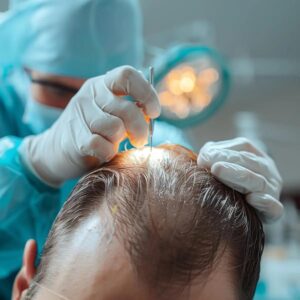
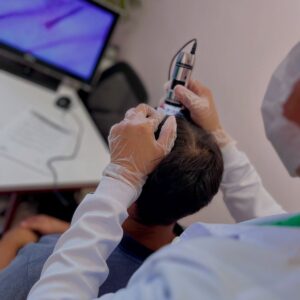
DHI (Direct Hair Implantation)
- Revised FUE using implanter pen
- No channel opening stage (less bleeding, faster healing).
- More precise graft placement
- Tends to require more grafts per session
What is transplant
Hair transplant is a surgical procedure in which hair follicles are moved from one part of the body (often the back or sides of the head)—the donor site—to a balding or thinning area, usually on the head (the recipient site).
How hair loses
Hair loss is happens when hair follicles shrink, become damaged, or enter a prolonged resting phase—often due to genetics, hormones, stress, or health conditions—causing hair to thin or fall out.
how hair Transplants
Hair transplant ideas involve the hair replacement process through the surgical transfer of healthy hair follicles to bald patches using techniques like FUE, FUT, or DHI. Specializations can be focused towards specific requirements like facial hair transplants, ethnic hair transplants, scar reformation, or female hair restoration.